
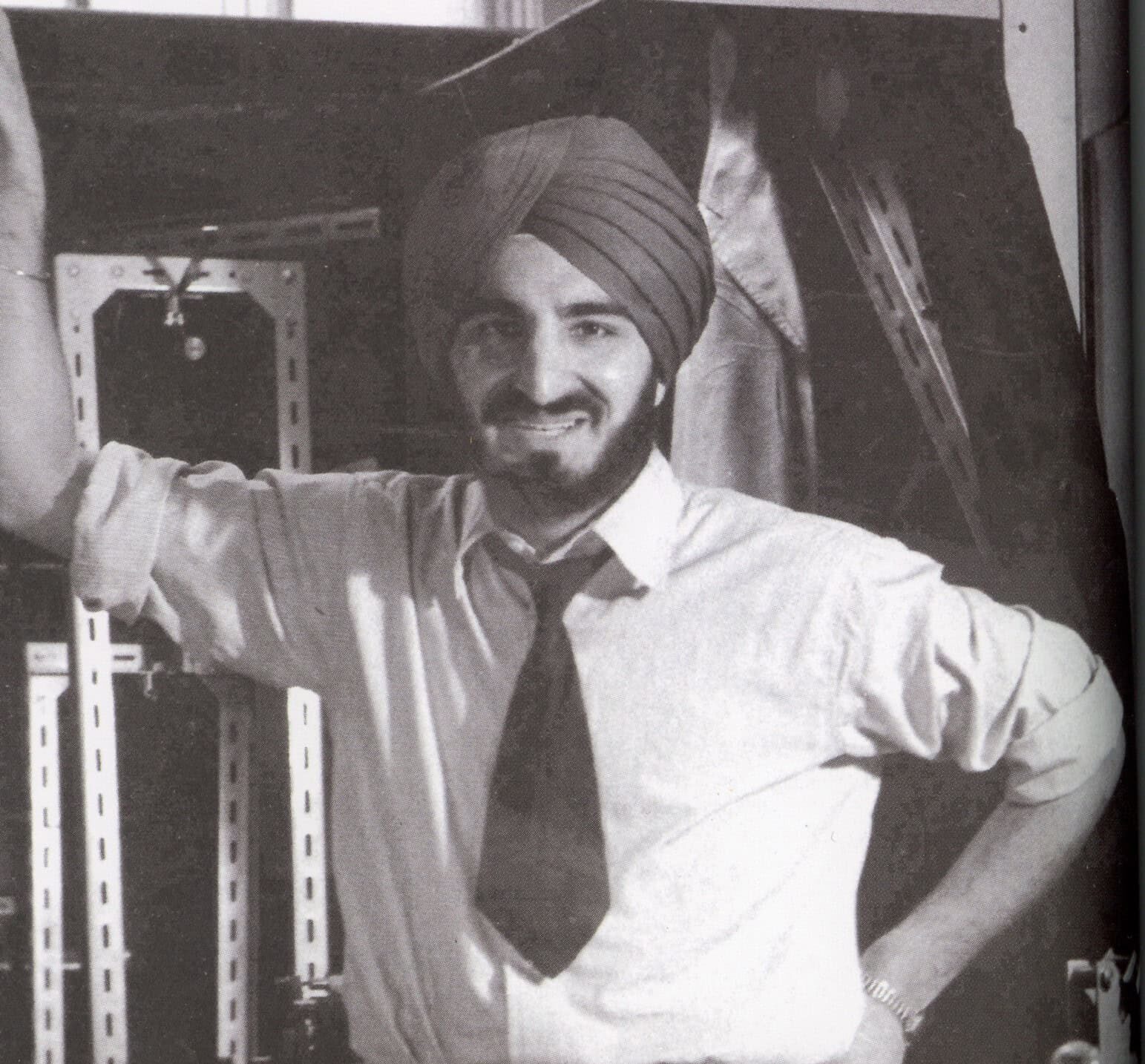
In the world of modern communication, few technologies have had as profound an impact as fiber optics. The ability to transmit data at the speed of light over long distances through thin strands of glass has revolutionized industries, powered the internet, and changed how we connect with one another globally. Behind this monumental invention stands a name that is often overlooked: Narinder Singh Kapany, a visionary scientist who earned the title “Father of Fiber Optics.” His pioneering work laid the foundation for the fiber-optic networks that connect the world today.
A Curious Mind: Early Life and Education
Born in 1926 in Moga, India, Narinder Singh Kapany’s journey into the world of optics began long before fiber optics were even a concept. Raised in a family that valued education and intellectual curiosity, Kapany was fascinated by light from an early age. His passion for science led him to pursue a degree in physics at Agra University in India, where he began to explore the properties of light and how it could be manipulated.
In 1948, Kapany moved to London to continue his studies at Imperial College, where he worked under the guidance of physicist Lord Rayleigh, a leader in the field of optics. It was here that Kapany’s deep interest in light and its applications would set the stage for his most significant scientific breakthrough.
The Spark of an Idea: Fiber Optics and the Birth of a Revolution
While studying at Imperial College, Kapany became aware of the work being done on total internal reflection, a concept that described how light could be guided through materials like glass or water without escaping. This principle had been discovered in the early 19th century by Isaac Newton and others, but Kapany saw its potential for a new kind of communication system.
In 1952, while still a student, Kapany began investigating how light could be transmitted through flexible glass fibers. He envisioned a system where light could travel through these fibers over long distances, carrying information in the form of pulses of light—essentially what would become fiber-optic communication. At the time, it was still a wild idea—light transmission through glass had never been considered a viable solution for communication.
Kapany’s idea was radical, but he was determined to prove that it could work. By 1954, Kapany was working on his thesis at Stanford University in California, where he demonstrated that light could indeed travel through long lengths of glass fiber without significant loss, using the principle of total internal reflection. This was a breakthrough moment: Kapany had proven that light could be guided through fibers, making it a viable solution for long-distance communication.
Fiber Optics: The Concept That Would Change the World
Kapany’s work didn’t end with his thesis. He continued to push the boundaries of fiber-optic technology, pioneering techniques that would enable practical fiber-optic systems. One of his most significant achievements came in 1956 when he published an article in Scientific American, titled “The Transmission of Light in Optical Fibers”. This article introduced the concept of fiber optics to the world and effectively coined the term “fiber optics.” Kapany’s work laid the groundwork for all future developments in the field, from the transmission of light through optical fibers to the creation of fiber-optic cables that are now used in everything from telecommunications to medical imaging.
While Kapany is often credited with coining the term, his work wasn’t just about naming the technology—it was about proving its possibilities. He showed that light could travel great distances through glass fibers, transmitting data with incredibly high speed and low loss. His work unlocked a world of possibilities for the future of communication.
In the early 1960s, while Kapany was working on his theories, Charles Kao and George Hockham at Standard Telecommunication Laboratories in the UK showed that low-loss optical fibers could be used for long-distance communication, and they helped develop the theoretical foundation for fiber-optic networks. In recognition of his contributions, Kao was awarded the Nobel Prize in Physics in 2009.
Kapany, however, was not as widely recognized for his role in the development of fiber optics, despite being one of its primary architects. His work provided the scientific and technological foundation that enabled Kao and others to develop practical systems for fiber-optic communication.
Pushing Boundaries: Kapany’s Continued Contributions
Kapany’s work didn’t stop with fiber optics. After his groundbreaking research, he continued to contribute to the field of optics, exploring new applications and innovations. He helped develop the fiber-optic endoscope, which is now used extensively in medical diagnostics and minimally invasive surgeries. His contributions to medical technology, particularly in the field of optical imaging, have saved countless lives.
In addition to his scientific work, Kapany also became a passionate advocate for science education and technology commercialization. He helped establish the Kapany Foundation, which promotes scientific research and provides educational opportunities for young people interested in the sciences. Kapany has spent his life sharing his knowledge, not only through his inventions but also by mentoring and supporting future generations of scientists and engineers.
Recognition and Legacy: A Vision Realized
For much of his life, Kapany remained somewhat in the shadows of other luminaries in the field, particularly Charles Kao, who received the Nobel Prize for the work on fiber optics. However, Kapany’s role in the development of fiber optics was slowly recognized. In 2002, he was honored with the Marconi Prize for his pioneering contributions to fiber-optic technology. This was a long-awaited acknowledgment of the significance of his work.
Kapany’s legacy is everywhere in today’s world. Every time we make a video call, send an email, stream a movie, or use the internet, we are benefiting from Kapany’s vision of using light to carry information. His invention of fiber optics has become the foundation of the global communications networks that power our digital lives.
His life’s work has not only influenced the telecommunications industry but has also had profound effects on other fields, from medicine to data storage, from military communications to space exploration. The fibers that carry light around the world have connected billions of people, enabled instant communication across continents, and transformed the way we live.
Conclusion: The Father of Fiber Optics
Narinder Singh Kapany’s contributions to the world of optical communications are immeasurable. His work in fiber optics and light transmission has shaped the very fabric of the modern world. Without his innovative thinking, it’s hard to imagine how we would communicate today. He turned what was once a theoretical concept into a technology that powers the internet, modern telecommunications, and medical imaging.
Kapany is truly the Father of Fiber Optics, a visionary who transformed a scientific idea into one of the most impactful technological revolutions in history. His legacy continues to live on in every fiber-optic cable that connects the world and in every application that relies on the speed and efficiency of light-based communication.