1. What is optical fiber?
Optical fiber is a flexible, transparent strand of glass or plastic used to transmit light signals over long distances. It is widely used in telecommunications, data centers, and networking due to its high bandwidth and low signal loss.
2. How does optical fiber work?
Optical fiber works by transmitting light pulses through its core, which is surrounded by a cladding layer that reflects light back into the core. This principle, called total internal reflection, allows data to travel over long distances with minimal loss.
3. What are the types of optical fiber?
- Single-Mode Fiber (SMF):
- Designed for long-distance communication.
- Smaller core diameter (8-10 microns).
- Supports high bandwidth and low attenuation.
- Multi-Mode Fiber (MMF):
- Used for shorter distances (e.g., within buildings or data centers).
- Larger core diameter (50-62.5 microns).
- Supports multiple light modes, making it less expensive but with higher attenuation.
4. What are the key components of an optical fiber system?
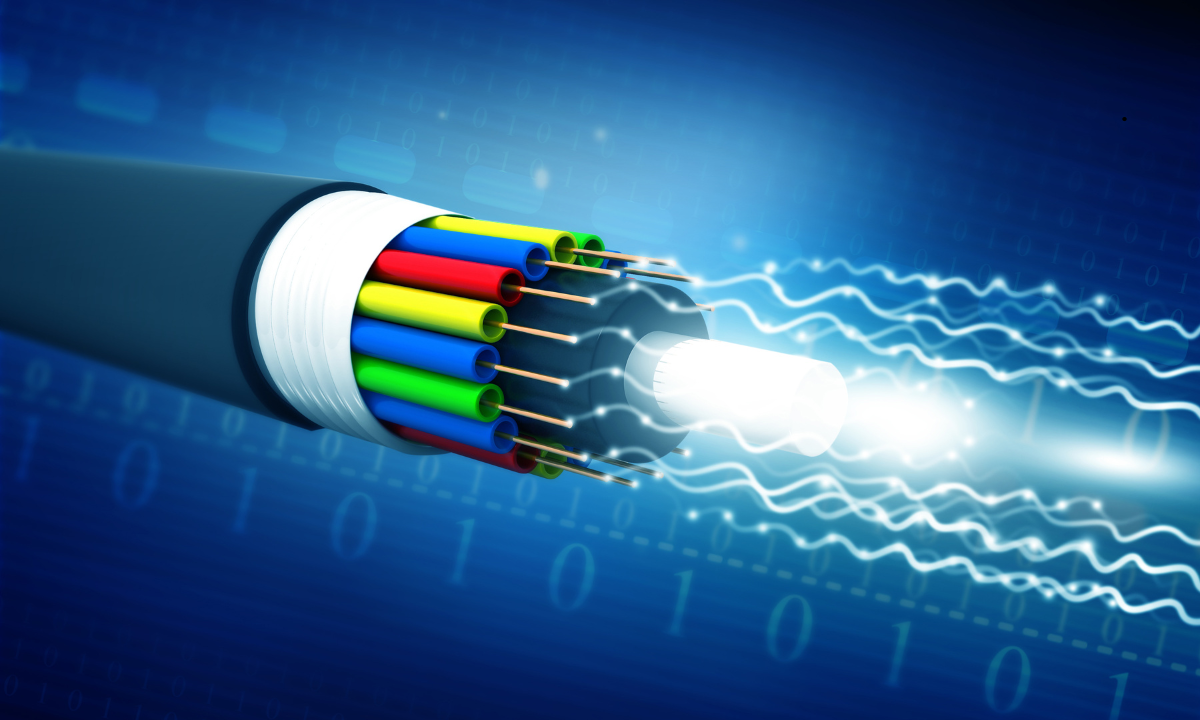
- Fiber Cable: Contains the core, cladding, and protective coating.
- Transmitters: Convert electrical signals into light signals (e.g., lasers or LEDs).
- Receivers: Convert light signals back into electrical signals.
- Connectors and Splices: Join fibers together with minimal signal loss.
- Amplifiers and Repeaters: Boost signals over long distances.
5. What are the advantages of optical fiber?
- High Bandwidth: Supports extremely high data transfer rates (up to terabits per second).
- Low Latency: Ideal for real-time applications like video streaming and gaming.
- Long Distances: Signals can travel hundreds of kilometers without significant loss.
- Immunity to Interference: Unlike copper cables, fiber is not affected by electromagnetic interference (EMI).
- Security: Difficult to tap into without detection, making it more secure than copper.
- Lightweight and Durable: Fiber cables are thinner, lighter, and more resistant to environmental factors.
6. What are the challenges of optical fiber?
- Cost: Higher upfront costs for installation and equipment compared to copper.
- Fragility: Glass fibers can break if bent too sharply or mishandled.
- Specialized Skills: Installation and maintenance require trained technicians.
- Compatibility: Older infrastructure may not support fiber without upgrades.
7. What are the applications of optical fiber?
- Telecommunications: High-speed internet, voice, and video transmission.
- Data Centers: Connecting servers, storage, and networking equipment.
- Cable TV: Delivering high-definition video signals.
- Medical Imaging: Used in endoscopes and other imaging devices.
- Military and Aerospace: Secure, high-speed communication in harsh environments.
- Industrial Automation: Reliable data transmission in factories and plants.
8. What is the difference between single-mode and multi-mode fiber?
| Feature | Single-Mode Fiber (SMF) | Multi-Mode Fiber (MMF) |
| Core Diameter | 8-10 microns | 50-62.5 microns |
| Distance | Long-distance (up to 100+ km) | Short-distance (up to 2 km) |
| Bandwidth | Higher | Lower |
| Cost | More expensive | Less expensive |
| Light Source | Laser | LED or laser |
9. What are the current trends in optical fiber technology?
- Higher Speeds: Adoption of 400G and 800G technologies for data centers and 5G networks.
- Bend-Insensitive Fiber: Improved flexibility and durability for easier installation.
- Fiber to the Home (FTTH): Expanding high-speed internet access to residential areas.
- Space Division Multiplexing (SDM): Increasing capacity by using multiple cores within a single fiber.
- Green Fiber: Development of energy-efficient manufacturing processes and materials.
10. What is Fiber to the Home (FTTH)?
FTTH is a broadband network architecture that uses optical fiber to provide high-speed internet, voice, and video services directly to residential homes. It offers faster speeds and greater reliability compared to traditional copper-based networks.
11. How does optical fiber support 5G networks?
Optical fiber is critical for 5G networks because:
- It provides the high bandwidth and low latency required for 5G applications.
- It connects 5G base stations and data centers.
- It supports the dense network of small cells needed for 5G coverage.
12. What are the environmental benefits of optical fiber?
- Energy Efficiency: Fiber consumes less power than copper for the same data transfer.
- Long Lifespan: Fiber cables last longer, reducing waste.
- Reduced Material Use: Thinner and lighter cables require fewer raw materials.
13. What are the future directions for optical fiber?
- Terabit Networks: Development of technologies to support terabit-per-second speeds.
- Quantum Communication: Using fiber for secure quantum key distribution (QKD).
- AI-Driven Networks: Integrating AI to optimize fiber network performance and predict failures.
- Underwater Fiber: Expanding global connectivity with undersea fiber cables.
- Smart Cities: Deploying fiber networks to support IoT and smart city infrastructure.
14. What are the best practices for installing optical fiber?
- Proper Planning: Assess bandwidth needs, distances, and environmental factors.
- Avoid Sharp Bends: Follow the minimum bend radius to prevent signal loss or cable damage.
- Use Quality Components: Invest in high-quality connectors, splices, and transceivers.
- Test and Certify: Perform thorough testing (e.g., OTDR testing) to ensure performance.
- Documentation: Maintain detailed records of the installation for future maintenance.
15. How do I choose between single-mode and multi-mode fiber?
- Single-Mode Fiber: Choose for long-distance, high-bandwidth applications (e.g., telecommunications, data center interconnects).
- Multi-Mode Fiber: Choose for shorter distances and cost-sensitive projects (e.g., within buildings or campuses).
This FAQ provides a detailed overview of optical fiber, addressing its technology, applications, benefits, challenges, and future trends.